
It Takes a Whole Community to Raise Migrant Children: A Holistic Model Maintaining Continuity in Care
The Challenge: When Migration Disrupts EducationAccording to UNICEF, nearly 20% of India’s internal migrants were children in 2011. Migration discussions frequently overlook the needs of children from low-income migrant families, leaving them vulnerable to educational exclusion. Studies show that migrant children aged 6–18 are at greater risk of growth impediments resulting from a lack of early childcare supervision and support needs. In this age group, around 22% of migrant children were not enrolled in any educational institution.
Frequent mobility, lack of documentation, language barriers, unawareness of social protection, economic constraints, and unfamiliarity with nearby schools make it difficult for parents to enrol their children in school causing learning gaps, poor socialisation, limited access to nutrition, healthcare, and safety. Ensuring access to quality education for migrant children is therefore critical to achieving Sustainable Development Goal 4, which recognises education as a fundamental human right and a driver of social and economic progress
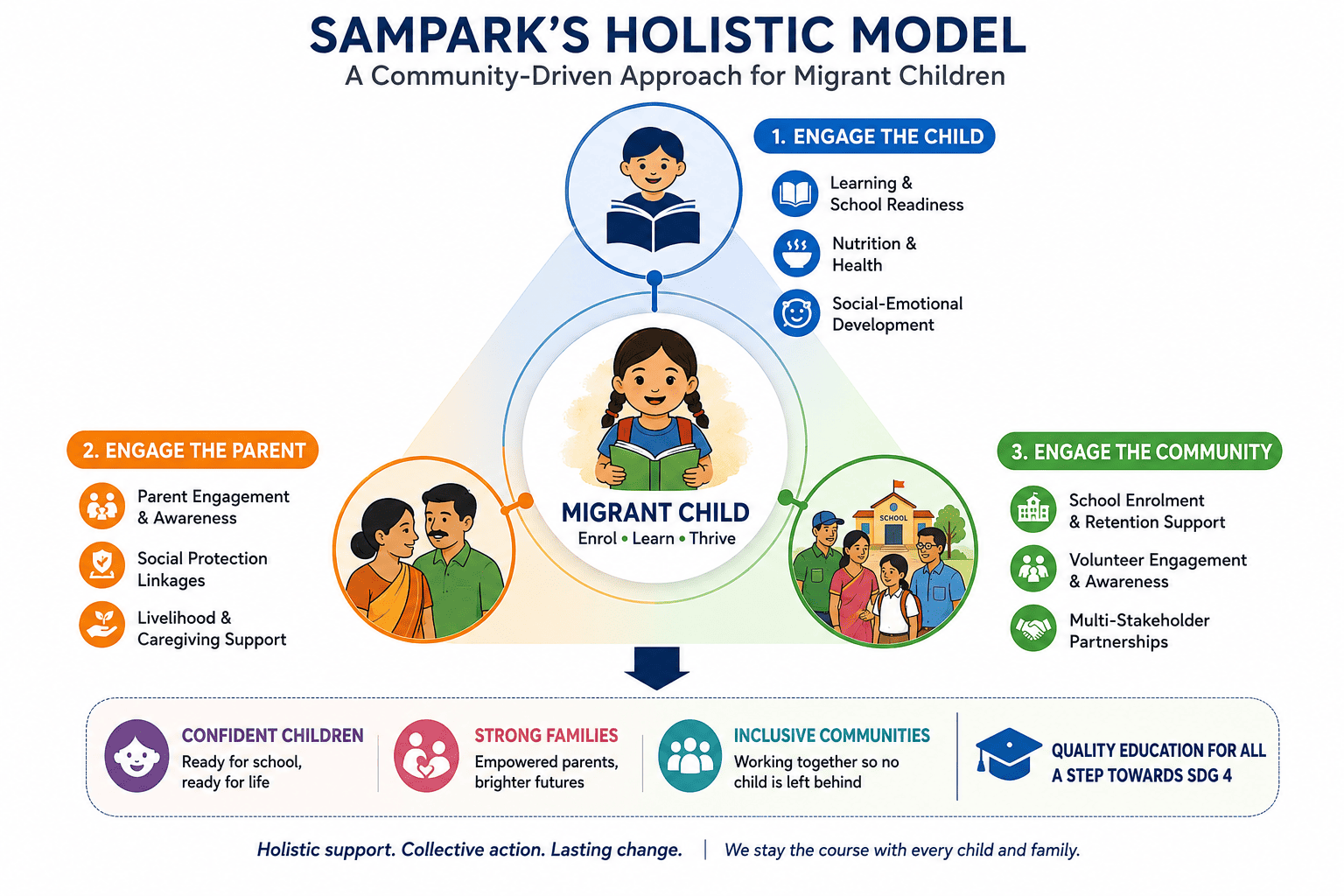
Sampark’s Solution: A Holistic, Community-Driven Model
At Sampark, we believe that school enrolment is only the first step. For migrant children to succeed, they need continuous support that addresses not only learning but also the challenges faced by their families and communities.
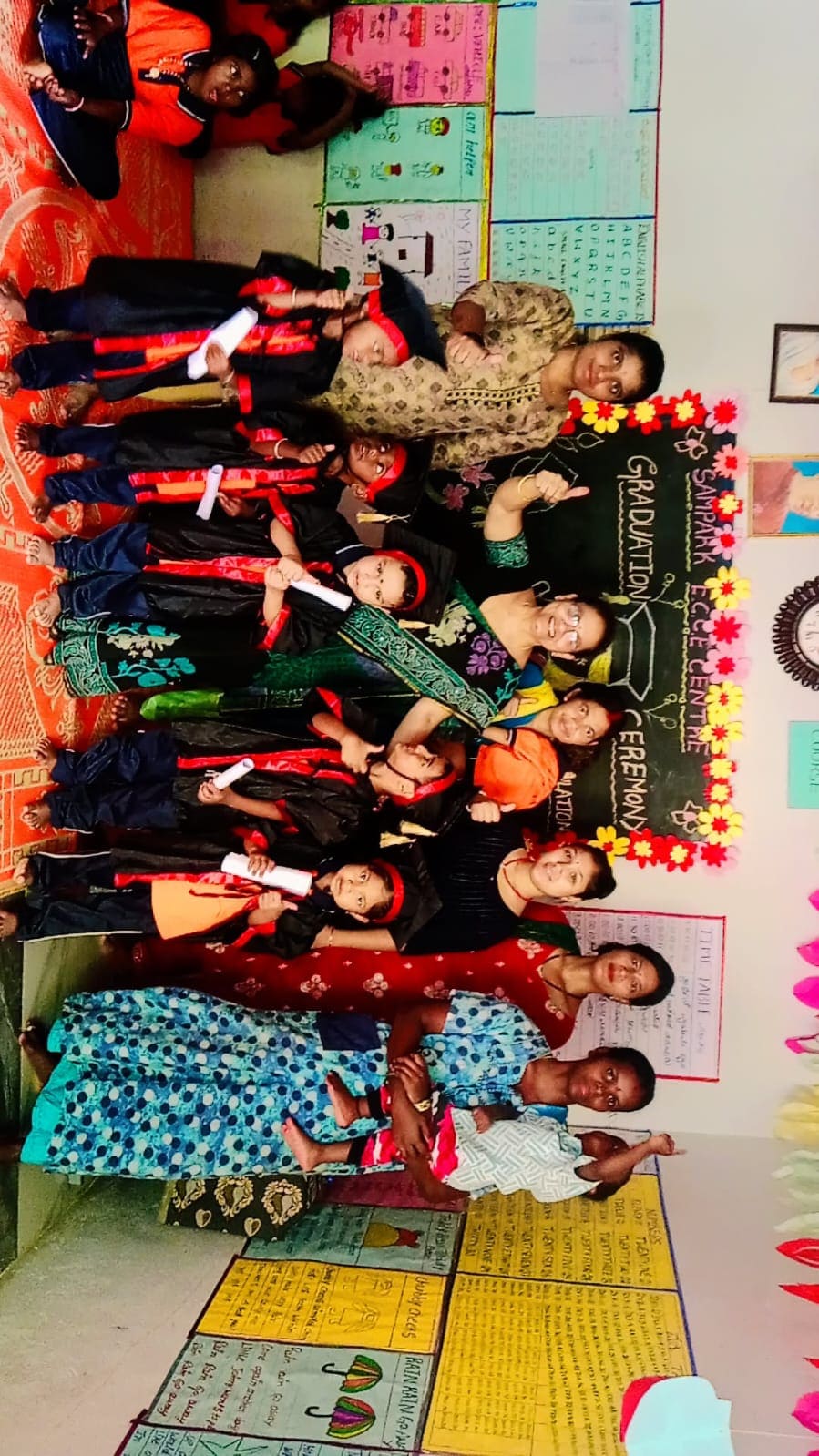
Sampark’s Early Childhood Care and Education (ECCE) Centres provide children with a safe, nurturing, and stimulating environment where they develop foundational literacy, numeracy, social, and emotional skills. Teachers support children through age-appropriate learning activities, homework assistance, and bridge school learning to prepare them for formal schooling.
At these centres, children also have access to nutritious meals, immunisation support, and growth monitoring services, as good health is a stepping stone to effective learning and long-term retention. A migrant child who is well-nourished learns better, grows confidently, and develops holistically.
The model actively engages parents, recognising their critical role in a child’s educational journey. Through regular parent-teacher meetings, families discuss children’s progress, health, hygiene, and attendance. Parents are also linked to social protection services, enabling them to access maternity care, healthcare, and educational benefits.
This support empowers mothers to pursue livelihood opportunities while contributing to the family’s income. Over time, parents become active advocates for education within their communities while strengthening the social and economic resilience of the entire migrant family.
The third pillar of Sampark’s approach is community ownership, achieved through a multi-stakeholder partnership model. Sampark collaborates closely with government schools, the health department, the state welfare board, corporate partners, and volunteers to build stronger and more sustainable investments in early childhood care within urban communities.
Through school enrolment support, awareness campaigns, and active community participation, the model ensures that children remain connected to learning opportunities despite the uncertainties of migration. It is a holistic approach that stays with children and their families throughout their journey, helping them realise their full potential.
Strengthening Systems for Migrant Children
India has made significant progress through initiatives such as the Right to Education Act, the National Education Policy (NEP), Sarva Shiksha Abhiyan, Integrated Child Development Services (ICDS), and Poshan 2.0. However, migrant children continue to fall through systemic gaps because existing systems are not designed to accommodate mobility and the changing needs of migrant families.
Policy efforts must focus on creating strong foundational learning ecosystems and expanding access to educational opportunities. Greater investment in bridge learning programmes, multilingual education support, and child-tracking mechanisms can help prevent children from dropping out during migration cycles.
Most importantly, stronger convergence between education, health, nutrition, and social protection systems is essential to address the multiple vulnerabilities migrant children face. When policies recognise and respond to the realities of migration, school enrolment becomes more than just an admission process—it becomes the beginning of a child’s journey toward lifelong learning, greater opportunities, and a brighter future.
For migrant children, quality education should not depend on where their parents work. It should be a fundamental right that travels with them, wherever they go.